
Warehouse Housekeeping and HSE Rules: Floors, Spills, Welfare Areas and Who Cleans What
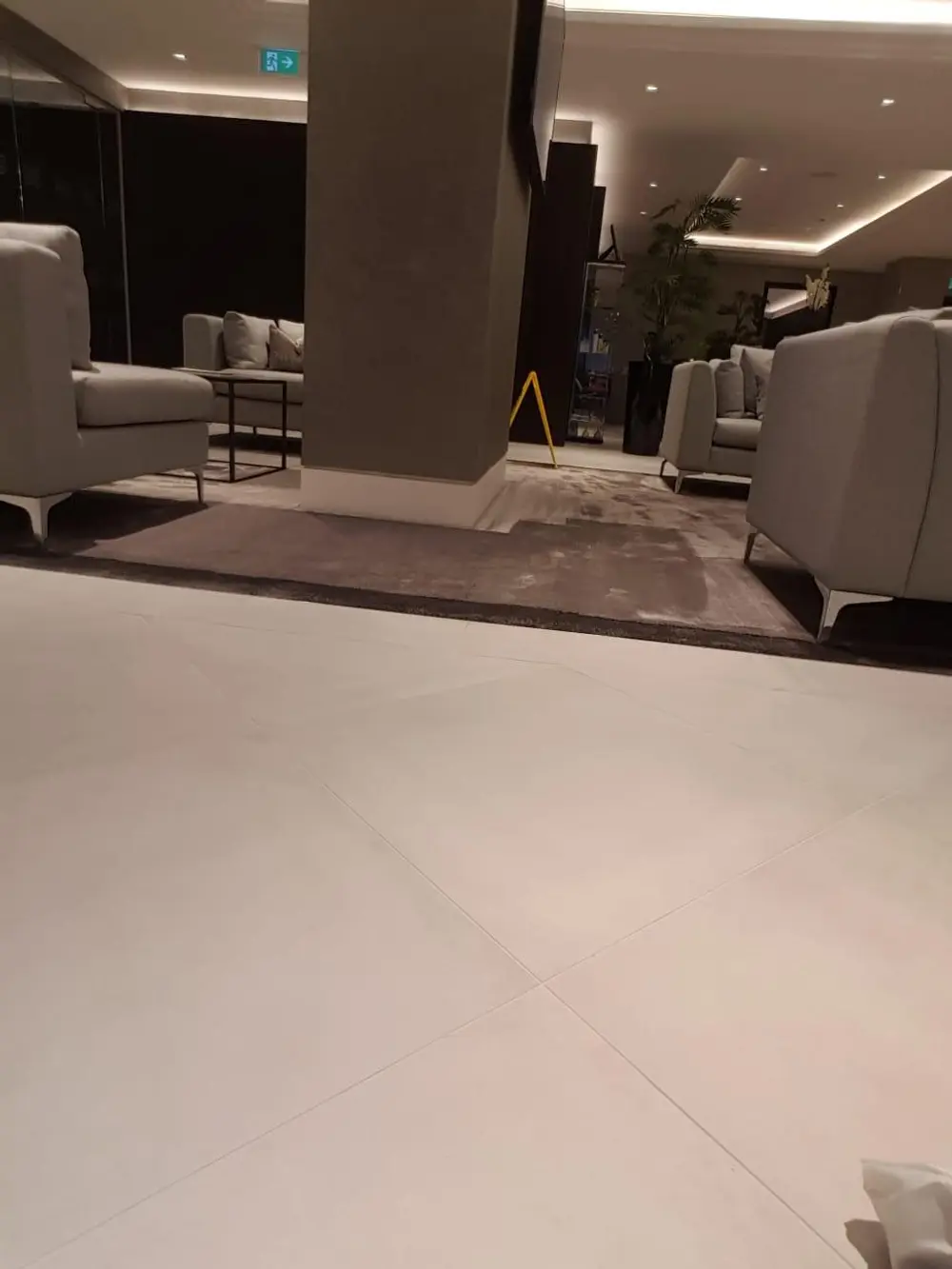
Slips, trips and falls on the same level are the most common cause of injuries to employees reported to HSE. In 2025/26 they made up 29% of non-fatal employee injuries reported under RIDDOR (HSE, kinds of accident statistics). In a warehouse, most of the causes are housekeeping problems: spills, wrap and debris in aisles, wet floors after cleaning. This guide sets out what the law actually says, what HSE advises about cleaning itself, and how the work splits between warehouse staff and a cleaning contractor. It is written for warehouse, operations and facilities managers, and sits alongside our warehouse cleaning service in London.
Key Takeaways
- The Workplace Regulations 1992 require a workplace to be kept sufficiently clean and its floors and traffic routes kept free, so far as is reasonably practicable, of anything that may cause a slip, trip or fall.
- Toilets, washing facilities and the rooms containing them must be kept in a clean and orderly condition. Driver and warehouse washrooms count as much as office ones.
- HSE warns that cleaning itself creates slip risk. Wet floor signs only warn; they do not stop people walking on a wet floor.
- The site and the contractor both have duties. Write down who handles in-shift spills, scheduled cleaning and anything specialist.
This guide is general information about the law in Great Britain, not legal advice. Duties depend on your site, your risk assessments and who controls the premises. Check your position with a competent health and safety adviser.
What does the law say about warehouse cleanliness and housekeeping?
The main source is the Workplace (Health, Safety and Welfare) Regulations 1992. They apply to warehouses as they do to offices, and five of them cover what most people mean by housekeeping. The wording is short, so it is worth reading the actual text rather than a summary.
| Regulation | What it requires | What it means on a warehouse floor |
|---|---|---|
| Regulation 9: cleanliness and waste | Every workplace, and its furniture, furnishings and fittings, must be "kept sufficiently clean". Floors, walls and ceilings inside buildings must be capable of being kept sufficiently clean, and waste must not build up except in suitable receptacles, so far as is reasonably practicable. | A cleaning routine for the whole site, not just the office, and bins that are emptied before they overflow. |
| Regulation 12: floors and traffic routes | Floors and traffic routes must be suitable, not slippery or uneven in a way that creates risk, and, so far as is reasonably practicable, "kept free from obstructions and from any article or substance which may cause a person to slip, trip or fall". | Spills cleared promptly, aisles and walkways kept clear of pallets, wrap and debris, and damaged floors reported. |
| Regulation 17: organisation of traffic routes | The workplace must be organised so that pedestrians and vehicles can circulate safely, with routes that are suitable, sufficient and indicated where necessary. | Cleaning has to fit the site’s traffic plan. Cleaners use pedestrian routes and do not leave equipment where vehicles run. |
| Regulations 20 and 21: toilets and washing facilities | Toilets and washing facilities, and the rooms containing them, must be "kept in a clean and orderly condition", with clean hot and cold or warm water, soap and a means of drying. | Driver and staff washrooms need the same standard as the office toilets, every day the site runs. |
| Regulation 25: rest and eating facilities | Suitable rest facilities must be provided, including suitable facilities to eat meals where food eaten in the workplace would otherwise be likely to become contaminated. | A canteen or break room that is actually usable: clean tables, surfaces and floors, and a kitchen area that is not a hazard. |
Notice what the regulations do not say. There is no required number of cleans per week and no list of approved products. The law sets an outcome, "sufficiently clean" and floors kept clear of slip and trip hazards, and leaves the employer to decide how to achieve it for their own site. That is why a warehouse cleaning schedule should come from the site’s risk assessment and shift pattern, not from a template.
Where does HSG76 fit in?
HSG76, Warehousing and storage: A guide to health and safety, is HSE’s main guidance for the sector. The current edition was published in 2007 and covers the wider risks of warehouse work, including manual handling, mechanical handling, site transport and working at height.
HSG76 is guidance, not law. As HSE puts it in its guidance, following it is not compulsory, but if you follow it you will normally be doing enough to comply with the law, and inspectors may refer to it. A common mistake online is to describe HSG76 as "the law on warehouse cleaning". The legal duties are in the Health and Safety at Work etc. Act 1974 and the regulations above; HSG76 explains how to meet them.
How does cleaning itself cause slips?
This is the part most warehouse cleaning guides leave out. HSE’s guidance on cleaning says plainly that "Contamination is implicated in almost all slip accidents" and that "People often slip on floors that have been left wet after cleaning" (HSE, slips and trips in cleaning). It adds that even a well-wrung mop leaves a thin film of water, which is enough to create a slip risk on a smooth floor.
HSE’s practical advice for floor cleaning includes:
- Clean during quiet hours when pedestrians are not around, or clean in sections so there is always a dry path through the area.
- Stop access to smooth wet floors with barriers, locked doors or sectioning. HSE is clear that "Signs and cones only warn of a hazard, they do not prevent people from entering the area."
- Use the right amount of the right cleaning product, and give detergents time to work on greasy floors.
- Use a dry mop or squeegee to cut drying time, remembering that a damp floor is still slippery.
- Clean up spillages immediately and leave the floor dry, and report damaged floor areas.
- Use the electrical socket nearest the work, so cables do not trail across walkways.
In a warehouse, that points to one practical answer: plan floor cleaning around the shift pattern and vehicle movements, not in the middle of them. That is why our hard floor cleaning and warehouse cleans are scheduled at the survey, with restricted areas and loading bay times written into the scope.
Why welfare areas matter as much as the warehouse floor
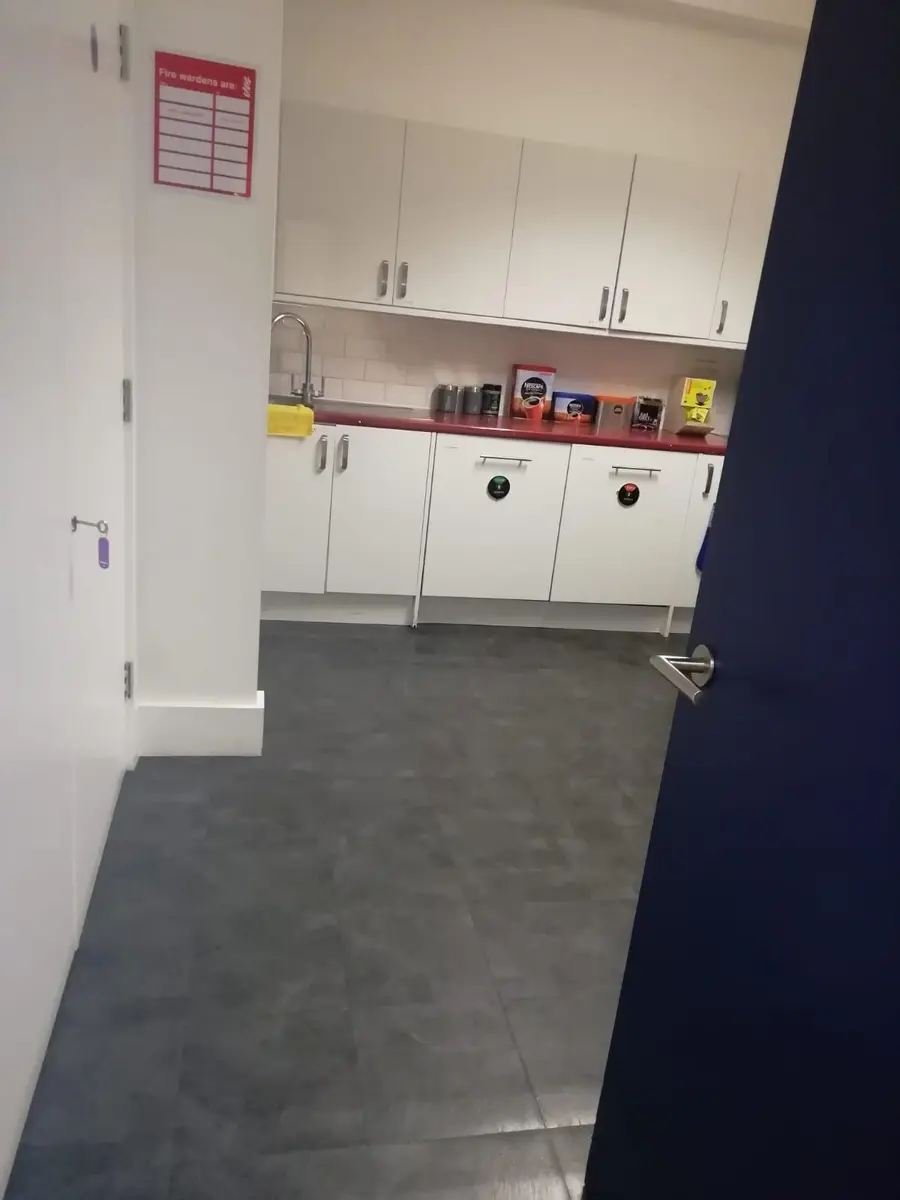
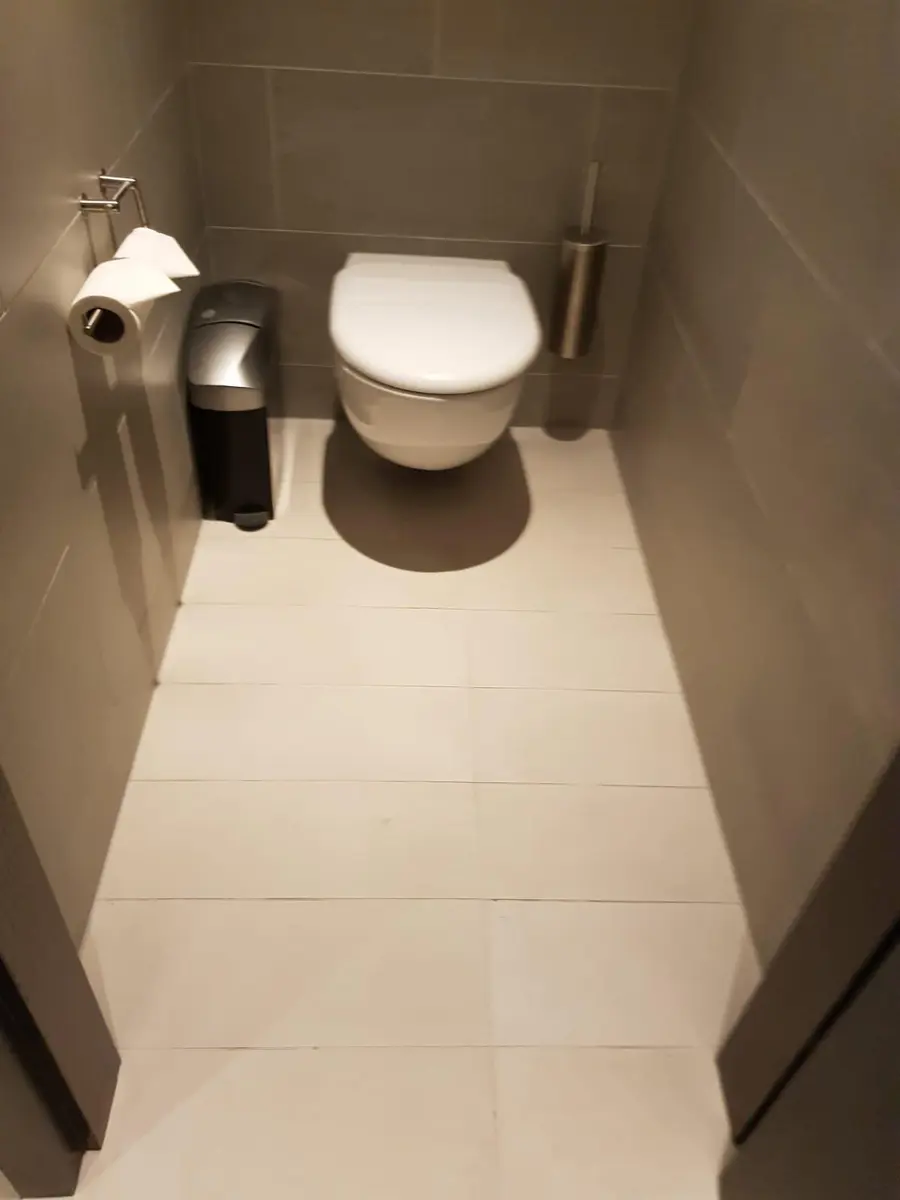
Floors get the attention because that is where injuries happen. But regulations 20, 21 and 25 put a separate, specific duty on toilets, washing facilities and eating areas, and those are the areas staff and visiting drivers judge a site by. The wording for toilets and washing facilities is direct: they and the rooms containing them must be "kept in a clean and orderly condition".
On a multi-shift site, welfare areas are used around the clock, so a single evening clean can leave the night and early shifts with a washroom that is already failing the standard. The usual fix is to match cleaning to the busiest changeovers, and to agree how problems between visits, such as a blocked toilet or an empty soap dispenser, are reported and dealt with.
Who is responsible: the warehouse or the cleaning contractor?
Both. HSE’s guide to using contractors (INDG368) says that "Both you and the contractor you use have responsibilities under health and safety law." It asks the client to check the contractor is competent, share the risks of the site, agree how those risks are controlled before work starts, and keep a check on how the work is going. The contractor must assess the risks of its own work, and the two must coordinate.
Bringing in a cleaning company does not hand over the site’s housekeeping duty. Spills during a shift still need clearing by whoever finds them, aisles still need keeping clear by the people who use them, and the site’s traffic plan still applies to cleaners. The contractor’s job is the agreed scope, delivered safely and recorded. A clear split looks something like this:
| Task | Warehouse staff | Cleaning contractor |
|---|---|---|
| Spills during the shift (oil, water, product, packaging) | Yes. Cleared immediately by whoever finds them, under the site’s spill procedure. | Only if a cleaner is on site and the spill is within the agreed scope. Hazardous or chemical spills stay with trained site staff or a specialist. |
| Aisles and walkways clear of pallets, wrap and debris | Yes. Part of daily operational housekeeping. | Sweeping and mopping of agreed floor areas on the scheduled visit, outside vehicle movements. |
| Toilets, washrooms and showers | Monitor and report problems between visits. | Yes. Scheduled cleaning to a written checklist, with restocking if agreed. |
| Canteen, break room and kitchen area | Staff clear their own plates and food. | Yes. Tables, surfaces, sinks, appliances exteriors, floors and bins. |
| Offices, entrances, reception and changing areas | Day-to-day tidiness. | Yes. Scheduled cleaning to a written checklist. |
| Racking at height, machinery, production lines, degreasing, pressure washing | Planned by the site with suitable specialists. | Not offered by Klean Touch. |
This table is an illustration, not a legal allocation. Your own split should come from your risk assessment and be written into the cleaning scope, so that nobody assumes someone else is dealing with it.
What to put in a warehouse cleaning scope
A scope that works on a busy site usually answers six questions in writing:
- Which areas are cleaned, listed by name, and which are excluded.
- When each area is cleaned, matched to shifts, changeovers and vehicle movements.
- How wet floors are controlled: sections, barriers or closed areas, not signs alone.
- Which routes cleaners use and which areas they must not enter, under the site’s traffic plan.
- How spills found by cleaners are handled, and which spills must go to site staff or a specialist.
- What record is left after each visit, and how problems are reported to a named contact.
Klean Touch works to this kind of scope. Cleaners hold their own DBS checks, each visit is recorded with timestamped photo reports against the agreed checklist, and cover is arranged if the regular cleaner is off. We clean offices, toilets and washrooms, canteens and break rooms, welfare and changing areas, entrances and agreed floor areas. We do not offer high-level racking cleaning, industrial degreasing, machinery or production-line cleaning, pressure washing or hazardous waste removal.
Get a warehouse cleaning scope in writing
Free site survey and a written proposal built around your shifts, traffic routes and welfare areas.
Frequently Asked Questions
What does HSE expect from warehouse housekeeping? ↓
The Workplace (Health, Safety and Welfare) Regulations 1992 require the workplace to be kept sufficiently clean, waste not to build up, and floors and traffic routes to be kept, so far as is reasonably practicable, free from obstructions and from anything that may cause a slip, trip or fall. Toilets, washing facilities and the rooms containing them must be kept in a clean and orderly condition. HSE guidance such as HSG76 Warehousing and storage explains how to manage the wider risks.
Is the warehouse operator or the cleaning contractor responsible for slips? ↓
Both have duties. HSE’s guide to using contractors says both the client and the contractor have responsibilities under health and safety law. The employer controls the site and its housekeeping; the contractor is responsible for doing its own work safely, for example not leaving wet floors open to pedestrians.
Are wet floor signs enough after mopping? ↓
No. HSE says signs and cones only warn of a hazard and do not prevent people from entering the area. Its advice is to stop access to smooth wet floors with barriers, locked doors or cleaning in sections, and to clean when pedestrians are not around where possible.
How often should a warehouse be cleaned? ↓
There is no legal frequency. The law sets the outcome, "sufficiently clean" and floors kept clear of slip and trip hazards, so the frequency depends on the site: shift pattern, headcount, how quickly areas get dirty and what risk assessments find. Welfare areas used every shift usually need cleaning every day the site runs.
Does Klean Touch clean racking or machinery? ↓
No. We clean the occupied, accessible parts of a warehouse: offices, toilets and washrooms, canteens and break rooms, welfare and changing areas, entrances, and sweeping and mopping of agreed floor areas. We do not offer high-level racking cleaning, industrial degreasing, machinery or production-line cleaning, pressure washing or hazardous waste removal.
Last reviewed 26 November 2026. Sources: legislation.gov.uk (SI 1992/3004), HSE statistics (updated October 2026), HSE cleaning and slips guidance, HSE INDG368 and HSG76. We review this guide when the rules or figures it describes change.
Related Reading
Book a warehouse site survey
Tell us about your site, shifts and welfare areas, and we will send a written proposal after a free survey.